

Sleep Token snuck up on me.
I gave the band a dismissive listen a few years ago as I was rediscovering heavy music as part of my grieving process after my son’s death. I have always had broad, eclectic music tastes that included hard rock, but the aggression, rage, and release of extreme music became more important to me as I experienced deeply personal loss, first my father and then my son. So when I first heard Sleep Token, I was primed for an unrelenting assault on my senses. The layered, nuanced compositions they offered were surprising and, at first, underwhelming.
Then the band kept creeping into my playlists. I started to see the genre-bending genius and the baroque compositional qualities that transform a metal track into a chamber suite. Then I started paying attention to the lyrics. And the lore. And it clicked. The story Vessel and company were telling resonated with me on every level: as a writer, a theologian, and, most importantly, as a man who has experienced the most profound loss possible.
I own like 17 Sleep Token t-shirts now. I’m actually wearing one as I write this.
I didn’t discover something new when I found Sleep Token. I recognized something. I’m a pastor. I’ve spent years thinking about how liturgy works, how narrative arcs carry a congregation through a worship service, how the rhythm of call and response and silence and crescendo can hold a room. I call my preaching style “liturgical jazz”: conversational, improvisational, interactive, but always within a structure that knows where it’s going.
When I encountered Sleep Token, I wasn’t learning the language of ritual for the first time. I was hearing someone else speak it fluently.
The Art, Seen Clearly
Vessel and the band know exactly what they are doing. They understand the music, the aesthetic, the lore as art. Vessel in particular has a very well-defined understanding of narrative, composition, and aesthetic. The “Ritual” framing they use for concerts isn’t accidental; it’s literary. The genre instability across songs, the masked personas, the mythology built across their discography, live performances, and even a graphic novel. All of it intentional, composed, and narratively coherent. Sleep Token is a literary band. The music rewards close reading. That’s a significant reason they’ve found such a diverse and devoted audience.
And this is also the music business. Let’s not be naive about that. The mystique is part of the package, and it works.
Many fans, like me, see it for what it is and engage the lore, the themes, and the art at that level. I’ve been to two Sleep Token shows now. The first was the Teeth of God tour in Asheville. The second was the Even in Arcadia tour in Atlanta. I was in the pit, and that was very cool. The show was amazing, with theatrics that went hard.
But as a show, the Teeth of God tour was better.
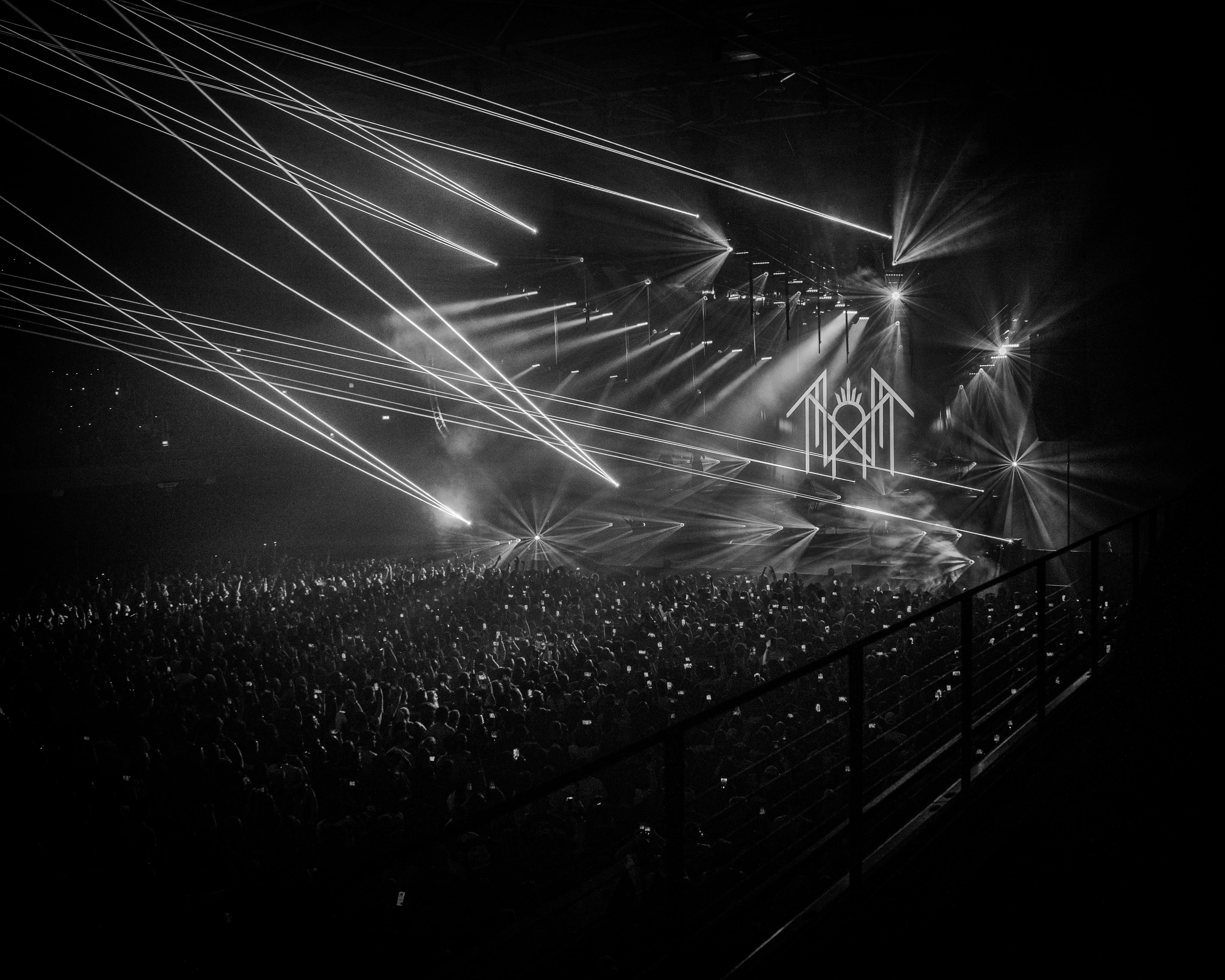
There was a completeness to it. A narrative arc that just worked at every level. Playing the trilogy in order made it narrative, not just setlist. The difference between a show that hits hard and a show that tells a complete story. If you think in terms of structure and flow and arc (and I do, professionally) you clock that difference immediately.
Sleep Token calls their concerts “Rituals.” The fan community has picked that up. For many, it’s affectionate shorthand. For some, it’s something more. And that “something more” is where this gets interesting.
Play vs. Ritual
There’s a difference between a ritual and entertainment.
Entertainment is something you witness. Let’s call it a play. The story is performed for you. You’re an audience receiving a narrative. You can be profoundly moved by a play. You can leave transformed. But you are receiving, not participating.
A ritual asks something of you. You speak. You move. You eat. You respond. The assembly does something together. In the Christian tradition, when we gather for real, liturgical worship, the congregation isn’t an audience. They are participants in something that requires their presence and their voices and their bodies to function.
Vessel isn’t a priest leading worship. He’s an actor performing a character arc. And he does it brilliantly. The Sleep Token concert is a devastatingly effective play. The “Ritual” branding is evocative and fitting because the shows carry the weightof ritual, the seriousness of it. But structurally, the narrative belongs to Vessel and the band. You receive it.
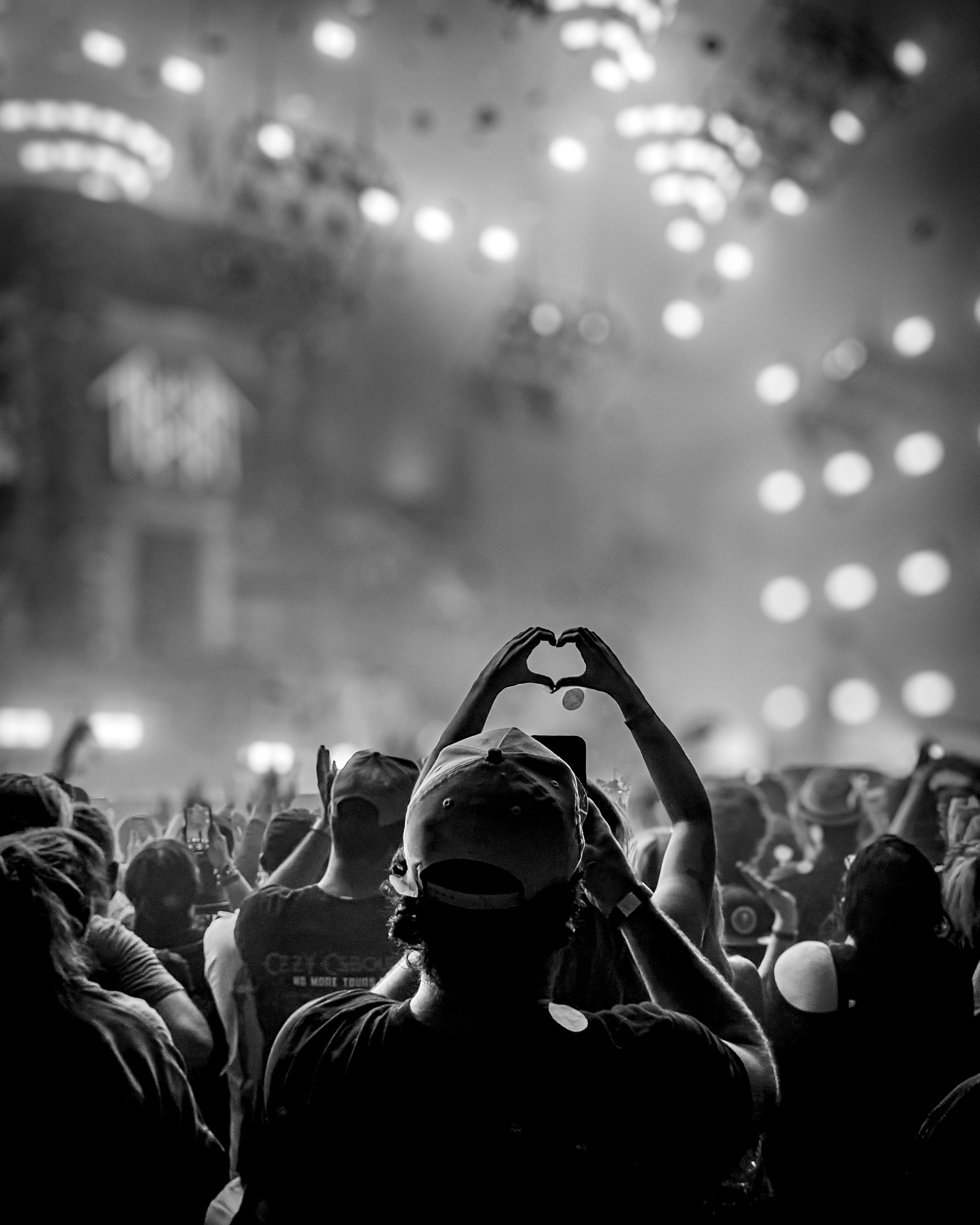
Except, and I have to be honest about this, for some fans, it doesn’t feel like receiving. It feels like participating. And Sleep Token has leaned into that. They drop confetti throughout the concert, small physical tokens of the experience. At the Atlanta show, there was a woman in the concourse afterward offering pieces of confetti to people who hadn’t been able to grab any during the show. Like a eucharistic minister distributing the elements to those who couldn’t make it to the rail.
I don’t think she would have used that language. But I’m a pastor, and I watched it happen, and that’s exactly what I saw. People wanted a piece of what happened in that room. Something tangible. Something to carry with them. And someone appointed herself to make sure nobody left without one.
That’s the impulse toward communion, the fundamental human longing for tangible connection to a transcendent experience. And the fact that people are finding it at a metal show should tell the church something.
The Descent
People, in my observation of fellow fans online and at rituals, really are having what can only be described as a religious experience with Sleep Token’s music. I’m not here to judge that. But I am here to notice what it reveals.
All scripture is literature, but not all literature is scripture. I know it’s stating the obvious, but categories matter. Scripture is lived, returned to, applied, shapes your experience. Literature is art that can deeply move us, but the relationship between reader and text is different.
Sleep Token’s music, especially the “Eden” trilogy, is extraordinary literature. And some fans are finding scripture within the literature, just as they are finding worship within the concert experience.
And here’s where the tension between sacred ritual and excellent entertainment gets interesting. The reason “ritual” language fits a Sleep Token concert isn’t merely because fans have elevated a concert to sacred status. It’s because the evangelical worship “experience” already collapsed the categories between ritual and entertainment. Between sacred worship and secular fandom. Between scripture and literature. When the church stopped caring about the difference, there ceased to be one.
Look at the megachurch model. Fog machines. Lighting rigs. Professional musicians on a stage. The congregation standing in the dark, singing along — or not. Passive reception of a produced experience. “Participation” reduced to showing up and feeling things.
By that standard? Yeah. Sleep Token qualifies as worship. Arguably better. At least Vessel commits to the narrative and the story has internal coherence.
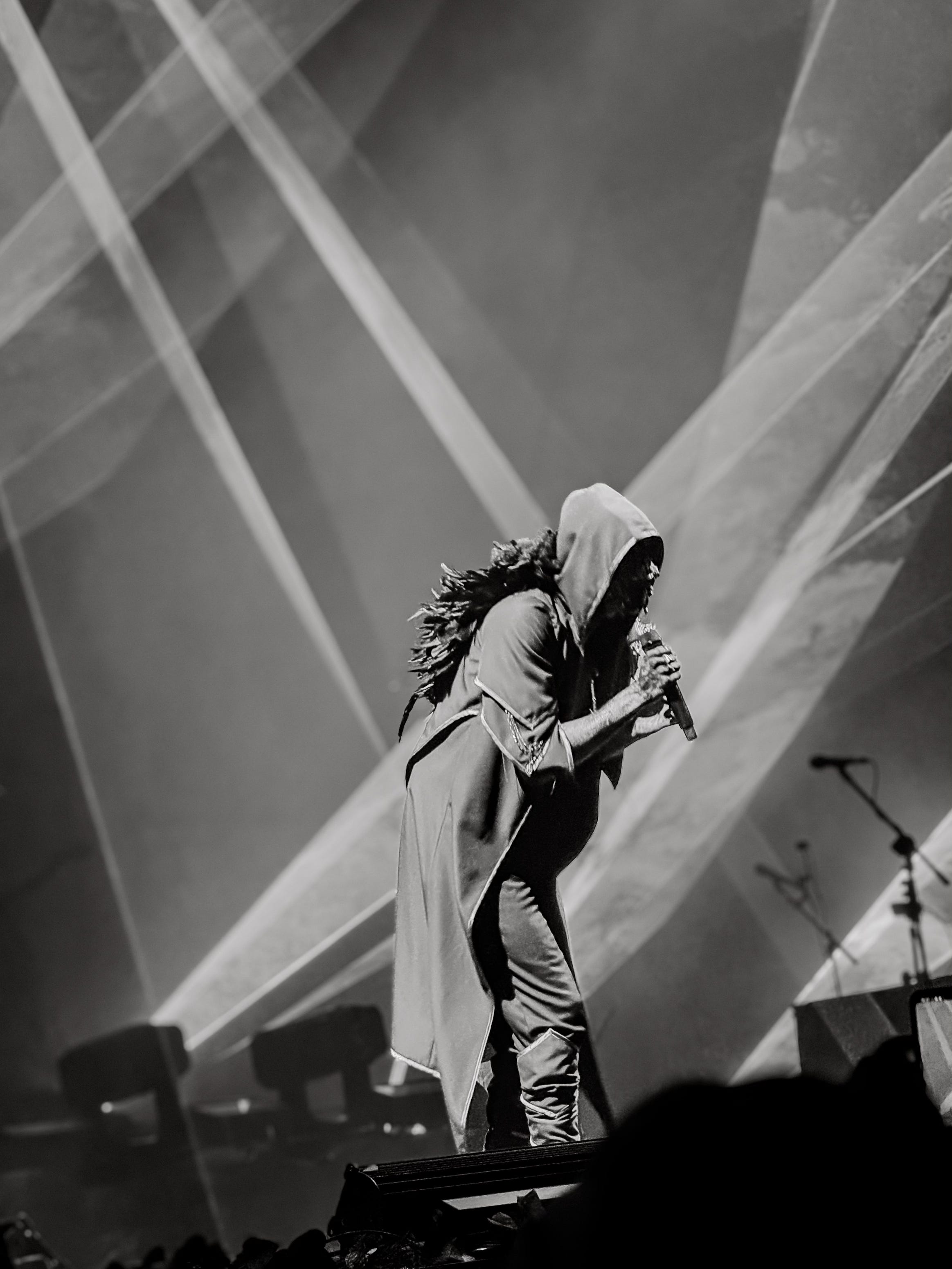
The Sleep Token fandom accidentally exposes the poverty of what “worship” has come to mean in large swaths of American Christianity. When your Sunday morning already looks like a concert, same production values, same audience-performer dynamic, same darkened room, same emotional manipulation through sound and light, then a rock concert that takes itself seriously is worship by the only metrics you’ve taught people to use. The fans aren’t confused. They’re applying the categories they were given. And the categories fit.
The Gaping Hole
This is the part that should keep church leaders up at night.
The hunger for ritual, for mystery, for embodied communal experience, for transcendence doesn’t disappear when someone leaves the church. It just finds somewhere else to land. Sleep Token happens to be an extraordinarily well-crafted vessel (no pun intended) for that need, precisely because the people making the music understand the mechanics of sacred space so well.
But the reason there’s a hole to fill is because the church’s social witness has become, for millions of people, repulsive. The church didn’t lose people because they stopped being hungry for the sacred. It lost them because it made the sacred feel unsafe. Abusive. Politically weaponized. Hypocritical on a scale that would embarrass a Roman emperor.
And now a masked frontman in a metal band is offering something that feels more like authentic worship than what many experienced on Sunday mornings. That’s not an indictment of Sleep Token. That’s an indictment of the church.
I say this as a pastor. I say it about my own tradition. We did this to ourselves.
What Liturgy Actually Offers
So what now?
If you’re reading this, there’s a decent chance you’re someone who left, or perhaps someone who stays and stays uncomfortable, perhaps even angry. You’ve become weary of a church that feels more like a concert than a community, more like a brand than a body, more like a product to consume than a table to gather around. And maybe you found something in music, in Sleep Token or somewhere else, that gave you back a piece of what you lost. Or a piece of what you never actually had but always wanted.
I’m not going to tell you that’s wrong. The incarnation settled the question of whether God can show up in unexpected places. God showed up in flesh, eating and drinking and attending parties. The material world isn’t a distraction from the sacred. It’s the medium through which the sacred is encountered. If something in a Sleep Token show put you in contact with grief you’d been carrying, or wonder you’d forgotten you could feel, or a sense of being held inside a story larger than yourself. I’m not interested in telling you that doesn’t count.
But I will tell you what you’re missing if you stop there.
Real liturgy asks something of you. It asks your voice, your body, your presence, your response. It puts bread in your hand and wine on your tongue and says this is for you. Not as a spectator, but as someone called forward by name. It places you in a room full of other people who are not performing for you and not being performed at, but doing something together that none of you could do alone. It tells you that you are not an audience. You are the body.
That’s what the church was supposed to be. That’s what it can still be. And recovering that, not by condemning what people found on the outside, but by becoming the kind of community people don’t have to leave to find meaning. That’s the work.
Sleep Token wrote a trilogy about a god who tries to become flesh using Vessel’s body and soul, and discovers the attempt destroys them both without achieving union. There’s a sermon in that, if we’re honest enough to hear it. The church tried to become relevant and discovered the attempt destroyed what made it sacred in the first place.
I’ll celebrate anyone writing about Sleep Token with an open mind, and I’ll also clap long and hard for fellow Sleepy Heads who understand the nature of the music itself. Thanks for writing about them.